About
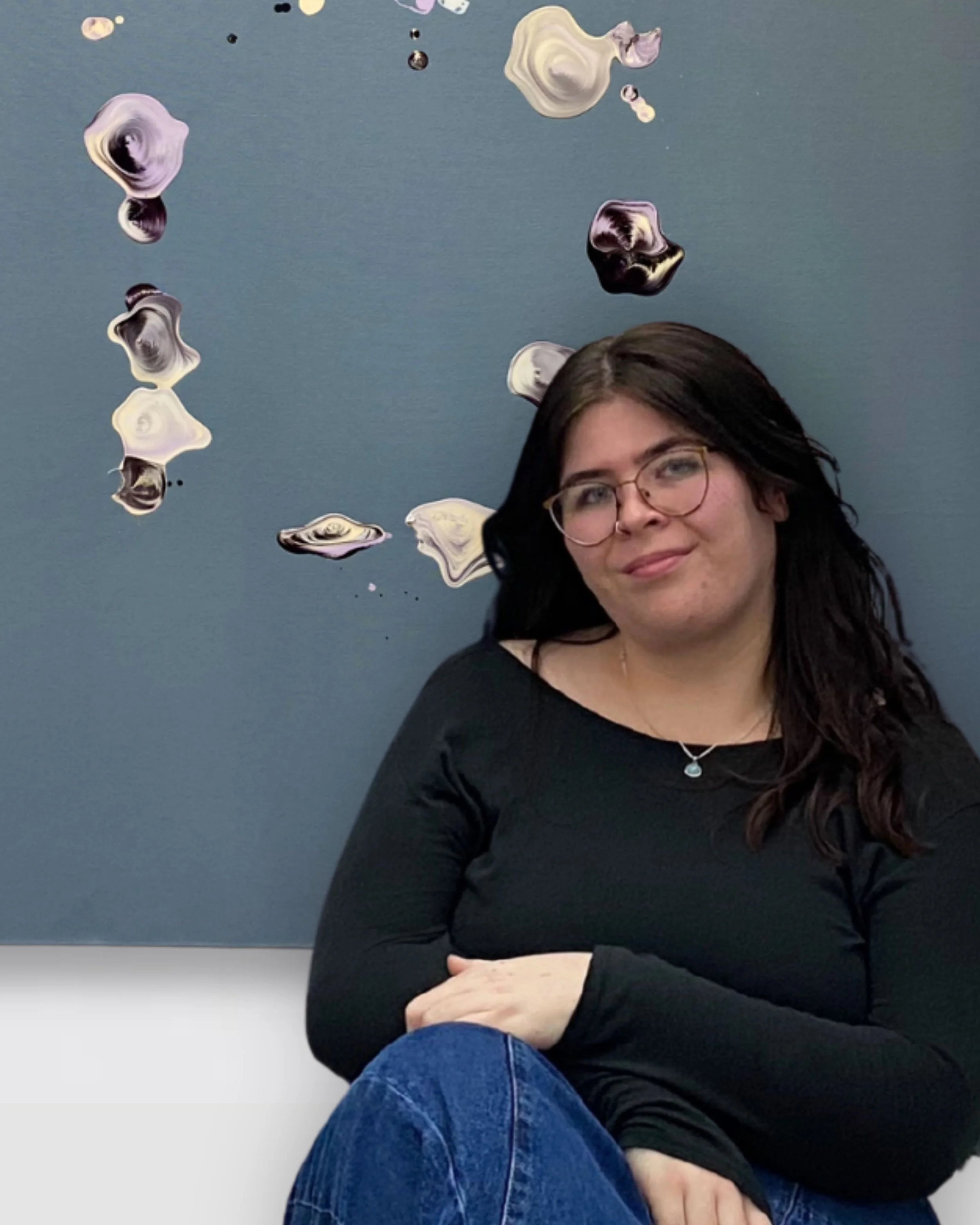
Liv Boyle (b. 2002) is a UK-based painter, currently completing her MA in Painting at the Royal College of Art.
My practice explores how authorship can be redistributed within painting between the artist, material and object. Painting becomes something produced through negotiation, where outcomes are determined by systems I set in place rather than direct composition.
I use found objects as active components within the painting process. These elements intervene in how paint moves, pools and settles, producing conditions that I cannot fully control. Rather than using objects to make images, I use them to redirect the movement of paint, allowing each work to emerge through the interaction between paint, object and gravity. The resulting paintings are records of these encounters rather than direct acts of composition.
Colour plays a key role in this process. I draw from established historical palettes and reintroduce them into new material situations to act as a record of paint’s movement. These references operate as structured systems of colour that are removed from their original context and reactivated through physical processes. This creates a tension between recognition and displacement, where familiarity is felt through colour but destabilised through form.
The paintings often assert multiple identities at once. They can be read as landscapes, portraits, as recreations of historical paintings, and as extensions of the tools used to make them, while simultaneously refusing to depict any recognisable subject. The paintings playfully challenge the boundaries between painting, object, and painting-as-object. They claim multiple identities at once while materially remaining nothing more than paint, surface, and residue.
My work is increasingly concerned with how contemporary processes of making can enter into dialogue with historically significant paintings. By adopting colour palettes, and dimensions of historical works, I use my process to engage with painting history without recreating the original image.